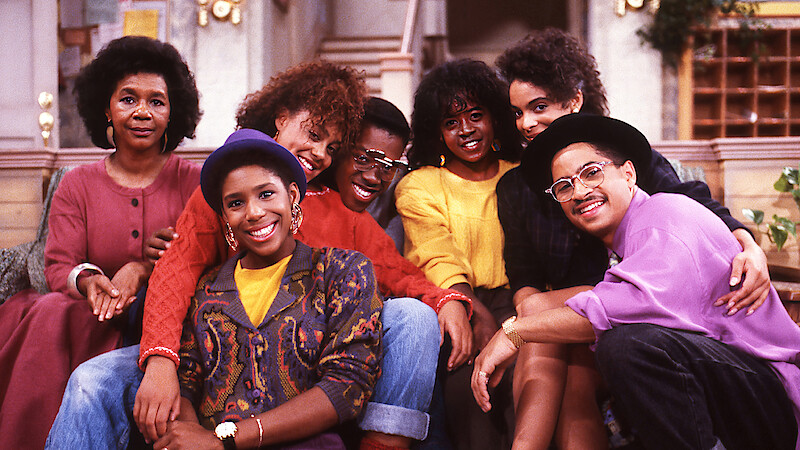
So, I am a huge fan of A Different World, and the reboot brought back so many memories of my youth as the writers dropped “Easter eggs” throughout the new version. But who am I kidding? I'm currently watching the original on Netflix for maybe the sixth or seventh time. You can't beat good TV!
There was something special about the original A Different World. For many of us, Hillman College wasn't just a fictional historically Black college or university (HBCU). Week after week, we watched Whitley, Dwayne, Freddie, Kim, Ron and others figure out who they were becoming. We watched them challenge one another, challenge authority, advocate for what they believed was right, make mistakes and grow.
Now, a new generation is walking the campus of Hillman College, including some who are the children of the original characters. The clothes are different. The language is different. Technology has completely changed the way people communicate. But the more I watched, the more I found myself thinking: This generation isn't as different as we think.
There were protests in the original version. There are protests in the reboot.
Students questioned decisions then. They question decisions now.
They spoke up about injustice then. They speak up now.
They challenged authority then. They challenge authority now.
And that feels a lot like today's workplace.
We talk frequently about how different generations approach work. And there are differences worth understanding. But sometimes we attribute behaviors to a generation when what we're really seeing is something much more universal: People want to be heard.

Speaking Up Isn't New
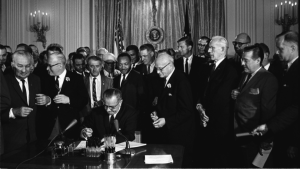
Long before phrases like psychological safety became part of our workplace vocabulary, previous generations were speaking up, questioning decisions, challenging authority and pushing institutions to change. Baby Boomers came of age during the Civil Rights Movement, anti-war protests, the women's movement and significant labor activism. Gen X entered workplaces where employees increasingly challenged traditional corporate hierarchies, discrimination, harassment and the idea that you simply accepted a workplace decision because someone in authority made it.
We saw that same spirit reflected in the original A Different World. The students at Hillman were not afraid to challenge authority, question what they believed was wrong or protest.
The language may be different today, but the instinct is not. Gen Z did not invent speaking up. But what has changed is how employees speak up, the reach of their voices and what they expect to happen when they do. A concern that might once have stayed within a department can now become a company-wide conversation, or a public one, very quickly. Employees may also expect greater transparency and a more immediate response when they raise concerns.
So the question shouldn't simply be, Why are they challenging us? Sometimes the better question is: What are they trying to tell us?
Challenging Authority Isn't the Same as Disrespecting It
This is where workplaces can get uncomfortable.
An employee questions a decision.
Someone asks why a policy exists.
A team member points out an inconsistency.
An employee disagrees with a manager.
And suddenly the conversation becomes about attitude, respect or insubordination.
But disagreement and disrespect aren't automatically the same thing.
The original A Different World gave us plenty of examples of people pushing against authority while learning how to use their voices effectively. Freddie Brooks, for example, was never afraid to speak up about an issue she believed in. Her passion was one of her strengths, but she also had to learn that being passionate about a cause and effectively getting others to hear you are not always the same thing.
That distinction matters in the workplace. Employees should be able to question decisions, raise concerns and disagree, but they also need to understand how to do so professionally and constructively. At the same time, leaders need to hear those questions without immediately interpreting them as disrespect or a challenge to their authority.
Sometimes an employee who pushes back isn't being insubordinate. They may be identifying something the organization needs to hear. A workplace where employees can only speak freely when they agree with leadership isn't really a psychologically safe culture.
Protest Is Usually About More Than the Protest
Seeing a protest appear in both versions of A Different World stood out to me. Different generation. Different circumstances. Same willingness to organize around something people believe matters…. there is a workplace lesson there.
By the time employees organize collectively, circulate a petition, file multiple complaints, escalate concerns or publicly challenge a decision, leaders may be focused on the visible event. But the department or organization should also be asking:
What happened before we got here?
Were concerns raised earlier?
Were employees given meaningful responses?
Did they believe existing processes would address the issue?
Were managers aware that frustration was building?
Sometimes what looks like a sudden employee-relations problem has been developing for months. The protest, complaint or escalation may simply be the moment leadership finally sees it.
Growth Often Requires Some Friction
The original A Different World wasn't compelling because the characters had everything figured out. They clearly didn't. But they still grew. Whitley grew. Dwayne grew. Freddie grew. Ron grew. And that growth wasn't always comfortable. It came through mistakes, consequences, relationships, disagreement, disappointment and people being willing to tell one another the truth. And workplace development isn't much different.
We sometimes talk about employee development as though it happens primarily through training programs and leadership courses. Those things matter. But some of the most important professional growth happens in difficult conversations, receiving feedback you didn't expect, learning that your intentions and your impact weren't the same, managing conflict instead of avoiding it, and realizing that being talented doesn't mean you have nothing left to learn.
Sometimes growth means learning when to speak. And sometimes it means learning how to listen. Organizations that want people to grow have to create environments where both can happen.
Same Hillman. A Different World.
The new Hillman students may communicate differently. They may have different expectations about boundaries, transparency, leadership and how quickly change should happen.
But their desire to be heard?
Their willingness to challenge something they believe is wrong?
Mistakes while figuring out how to use their voices?
None of that is particularly new.
It's easy to look at a younger generation of employees and say, “They're different.” Sometimes they are. But before we label something a generational problem, it may be worth asking whether we're looking at a very old workplace dynamic in a new package.
What has changed is the environment in which those dynamics play out. People can communicate faster, concerns can travel farther and expectations of leaders are different.
People will still ask questions. They will challenge. They will disagree. And sometimes, they will push institutions to change.
The role of leaders and HR isn't to eliminate those moments. It's to create workplaces that know how to navigate them, where people can raise concerns constructively, leaders can listen without immediately becoming defensive, and accountability and growth can exist at the same time.
Until next time,
Lead with intention. Operate in excellence. And always stay FINE!
Your favorite Chief HR Concierge!